Editor-in chief. Market intelligence and strategy expert, and long-year speaker, moderator. More than 15 years in global identity verification, age verification, and RegTech markets.
Posts by Per Henrikson:

In the accompanying 2026 Gartner® Critical Capabilities for Identity Verification report, Persona ranked #1 across two evaluated Use Cases: Risk Mitigation and Consumer.

New decree paves the way for nationwide biometric registration and digital ID issuance under the World Bank-backed WURI program.

Regula deploys entirely on customer-provided infrastructure, with no dependency on cloud services, giving clients a high degree of control over data residency and processing.

Cyera plans to acquire non-human identity startup Oasis Security for $1 billion, combining identity intelligence with data security to help organizations govern AI

Greece launches a €415.6 million ($472.8 million) bid for a digital ID card system to enhance security, authentication, and compliance with EU regulations.

New investment is flowing to the two services the report identifies as most under-served: AI-assisted screening (17.5%) and identity verification (14.9%).

Google’s new API relies on parents to set age ranges in Family Link.

The New York legislation is also among the first to include specific accuracy minimums for highly effective age assurance.

KYA-OS Protocol Specification v1.0.0 is an open specification designed to establish trusted identity, authorization, and accountability for AI agents.
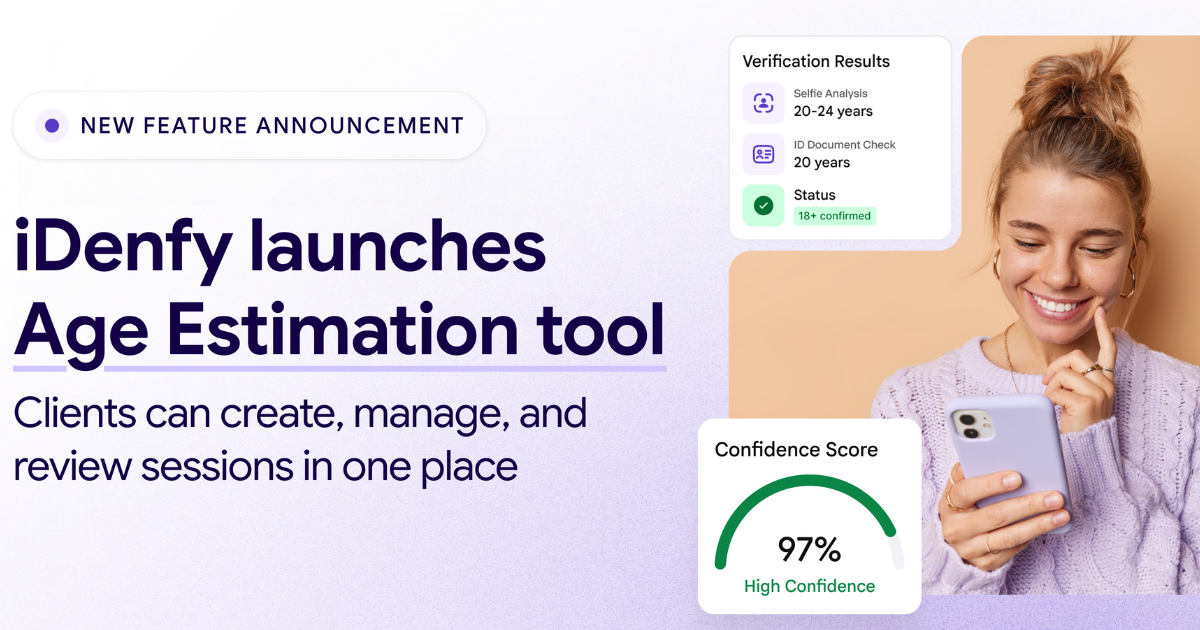
iDenfy has built it out with its own permission structure, billing model, and API endpoints, so its partners that only need Age Estimation checks are not required to adopt the full identity verification stack to access it.

The policy reversal does not alter the identity and customer due diligence obligations applying to lenders, brokers and other businesses covered by anti-money laundering regulations.

AI governance joins security and privacy certifications as digital identity platforms build trust for regulated industries.

